For decades, double glazing has been the standard solution for improving the thermal performance of windows. It is widely available, familiar to homeowners and installers, and its relatively low initial cost makes it an obvious choice for many projects.

But glazing technology has moved forward.

LandVac Vacuum Insulated Glass offers a fundamentally different approach — delivering exceptional thermal performance from an incredibly slim unit, backed by a 25-year warranty.

This is particularly significant when upgrading traditional timber windows, listed buildings, heritage properties and homes within conservation areas.

Standard double glazing can provide good thermal performance, but its thickness can make it unsuitable for traditional windows without significant alteration. Slimline double glazing reduces this thickness, but in doing so can sacrifice thermal performance and may also be accompanied by considerably shorter warranties.

Vacuum glass is designed to overcome this compromise.

Instead of asking “How thin can we make double glazing?”, LandVac uses vacuum technology to achieve centre-pane U-values as low as 0.34–0.40 W/m²K from units starting at just 6.3mm thick.

For property owners considering upgrading from single glazing, the question is therefore no longer simply:

“Should I install double glazing?”

It should also be:

“If I’m investing in upgrading my windows, which glazing solution gives me the performance, longevity and appearance I want for the years ahead?”

Vacuum Glass vs Double Glazing at a Glance

*Performance varies according to glass construction, cavity, coating, gas fill and overall specification.

The obvious advantage of conventional and slimline double glazing is the lower initial purchase price.

But glazing is a long-term investment.

When a product is expected to remain within a property for many years, thermal performance, warranty, potential replacement costs, installation costs and long-term energy retention all deserve consideration alongside the initial price.

How Does Traditional Double Glazing Work?

A conventional double-glazed unit consists of two panes of glass separated by a sealed cavity.

That cavity is normally filled with an insulating gas such as argon, while low-emissivity coatings can be incorporated to further reduce heat transfer.

The principle is relatively simple: the gas-filled cavity reduces the rate at which heat passes through the glazing.

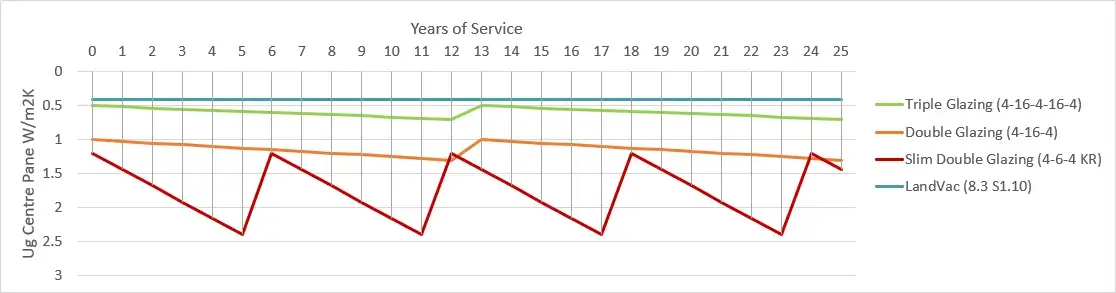
A typical 28mm double-glazed unit can achieve a centre-pane U-value of approximately 1.3 W/m²K, depending on the exact specification.

This represents good thermal performance and is one of the reasons double glazing has become so widely used.

However, achieving this performance normally requires an overall unit thickness of approximately 24–28mm.

That isn’t necessarily a problem for a modern uPVC, aluminium or timber window specifically designed around a double-glazed unit.

For a traditional window originally designed to hold a single pane of glass, however, it can create a significant challenge.

The Heritage Double Glazing Compromise

Traditional sash and casement windows were never designed to accommodate modern 24–28mm sealed units.

Installing conventional double glazing can therefore require:

  • Deeper glazing rebates
  • Larger glazing bars
  • Alterations to existing sashes
  • Removal of original timber
  • Changes to the appearance and proportions of the window
  • Replacement window sections
  • Or, in some circumstances, completely new windows.

For listed buildings, heritage properties and homes within conservation areas, these alterations can be particularly undesirable.

Slimline heritage double glazing was developed as one solution.

By significantly reducing the cavity between the panes, the overall glazing thickness can be brought down to approximately 12–16mm.

However, making a conventional gas-filled double-glazed unit thinner introduces another compromise:

Thermal Performance.

Depending on its exact construction, cavity and whether argon or krypton is used, very slim heritage double glazing can have centre-pane U-values of approximately 1.9–2.6 W/m²K.

This can still provide an improvement over traditional single glazing, but it represents a significant difference compared with both standard modern double glazing and vacuum glass.

Warranty periods can also be shorter.

While many conventional double-glazed units are offered with warranties around 10 years, slimline heritage units may have warranties around 5 years, depending on the manufacturer and specification.

Where particularly narrow sightlines are required, some specifications may carry restricted guarantees or no standard guarantee at all.

This means a property owner can potentially be accepting lower thermal performance and a shorter warranty simply to achieve a glazing unit thin enough for a traditional window.

LandVac provides another approach.

How Is LandVac Vacuum Glass Different?

Vacuum insulated glass doesn’t simply make a conventional double-glazed cavity smaller.

It changes the technology entirely.

Rather than relying on argon or krypton gas between the panes, almost all of the air is removed to create a vacuum.

This is important because gases transfer heat through conduction and convection.

By removing almost all of those gas molecules, these methods of heat transfer are dramatically reduced.

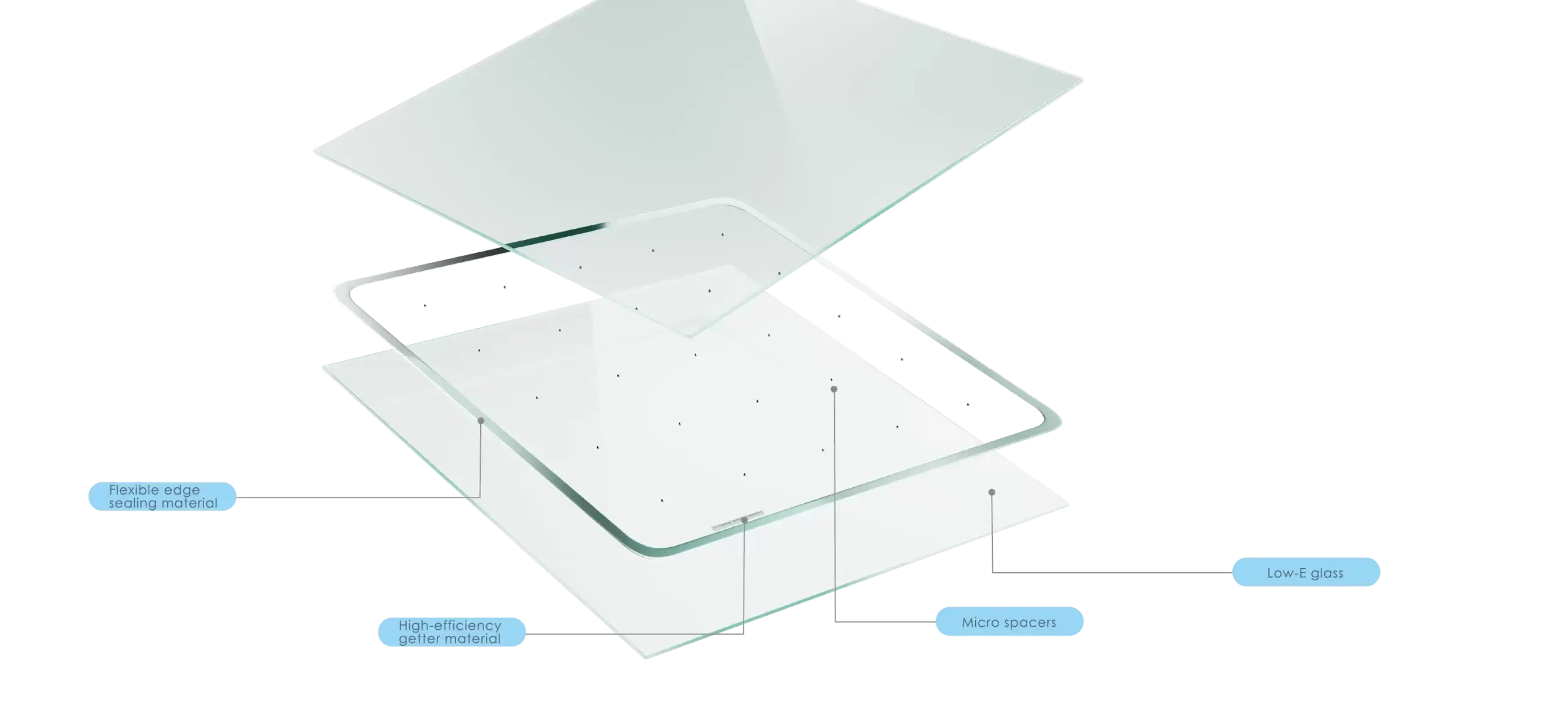
Tiny support pillars, known as micropillars, maintain the separation between the panes under atmospheric pressure, while a high-performance low-E coating further reduces radiative heat transfer.

The result is the combination that makes LandVac particularly compelling:

Exceptional insulation. Exceptionally slim glass.

LandVac Vacuum Insulated Glass can achieve centre-pane U-values as low as:

0.40 W/m²K

and, with certain specifications:

0.34 W/m²K.

This can be achieved from a glazing construction starting at just 6.3mm thick.

That creates possibilities which conventional gas-filled double glazing simply cannot offer.

How Much Better Is the Thermal Performance?

This is where the difference becomes particularly striking.

Consider the three options:

  1. Standard 24–28mm double glazing
    Approximately 1.3 W/m²K
  2. 12–16mm slimline heritage double glazing
    Approximately 1.9–2.6 W/m²K
  3. LandVac Vacuum Glass
    As low as 0.34–0.40 W/m²K

Remember that with U-values, lower is better.

Comparing a slimline heritage unit at 2.0 W/m²K with LandVac at 0.40 W/m²K, the rate of centre-pane heat transfer is approximately five times lower through the LandVac glass.

At 2.6 W/m²K compared with 0.40 W/m²K, the difference increases to approximately 6.5 times.

And at the highest-performing LandVac specification of 0.34 W/m²K, the difference can be greater still.

This doesn’t mean a home will use five or six times less energy. Windows are only one component of a building, and overall energy consumption depends on insulation, airtightness, heating systems, window area, external temperatures, solar gain and occupant behaviour.

What it does demonstrate is the enormous difference in centre-pane thermal performance.

Perhaps most importantly, LandVac achieves this without requiring a thicker glazing construction.

In fact, it can be considerably thinner than the slimline double glazing it outperforms.

That turns the traditional relationship between thickness and thermal performance on its head.

Why Does This Matter for Heritage Windows?

For a modern window, changing the glass is relatively straightforward because the frame has been designed around a modern sealed unit.

Heritage windows present a very different challenge.

Original sash windows and traditional timber casements are often important architectural features in their own right.

The objective should therefore be to improve their performance while retaining as much of their character as reasonably possible.

LandVac’s exceptionally slim construction can often allow it to be installed into existing traditional timber windows and glazing rebates where conventional double glazing would require significantly greater alteration.

Every project must be assessed individually, particularly where listed building consent or conservation requirements apply.

But where LandVac is suitable, the principle is powerful:

Keep the character. Keep the window. Upgrade the performance.

Rather than redesigning a beautiful traditional window around modern glazing, vacuum glass provides the opportunity to make the glazing work around the window.

Initial Cost vs Long-Term Value

LandVac is a premium glazing product and its initial purchase price is higher than conventional double glazing.

Depending on the exact products being compared, vacuum glass may cost around two to three times as much per square metre as some conventional or slimline double-glazed specifications.

If the comparison stops at the initial price of the glass, double glazing will therefore appear cheaper.

But that isn’t necessarily the best way to assess a product designed to remain in a building for decades.

A more complete comparison considers:

Initial purchase price + thermal performance + warranty + potential replacement + installation + disruption + long-term energy retention.

This is particularly relevant when comparing warranty periods.

LandVac is supplied with a 25-year warranty.

Many conventional double-glazed units are offered with warranties around 10 years, while some slimline heritage units may carry warranties around 5 years, depending on specification.

A warranty period isn’t the same thing as a guaranteed product lifespan, and a double-glazed unit doesn’t automatically fail when its warranty expires.

However, if a sealed unit does eventually fail and requires replacement, the cost isn’t necessarily limited to buying another piece of glass.

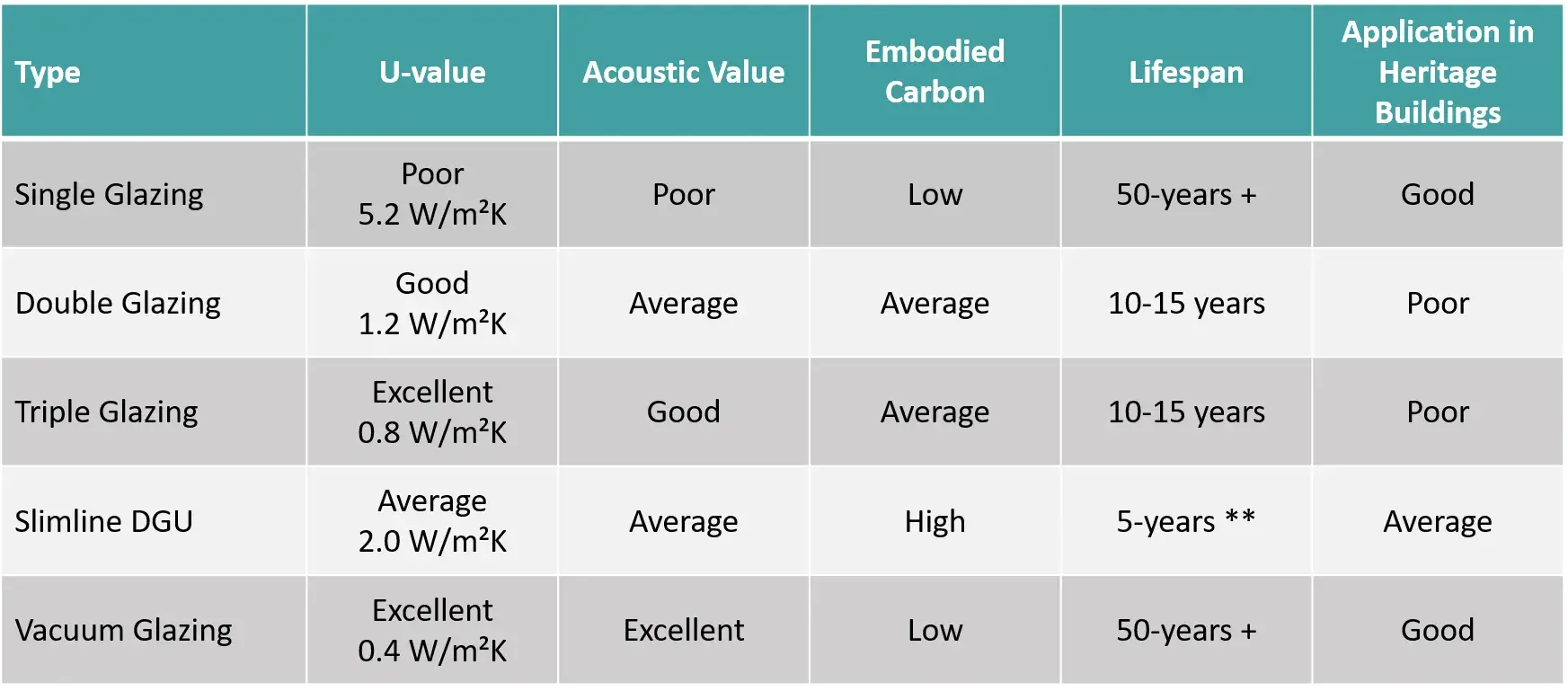
There may also be:

  • Removal costs
  • Installation labour
  • Access or scaffolding requirements
  • Joinery work
  • Making good
  • Decorating
  • Disruption to the property.

If glazing needs replacing multiple times during the period in which an alternative product remains in service, the initial price difference becomes less representative of the true long-term cost of the window.

What About Performance Over Time?

The insulating performance of conventional double glazing relies partly on the integrity of its sealed gas-filled cavity.

Over time, insulating gas can gradually migrate through the edge-seal system. If the sealed unit eventually fails, moisture can enter the cavity, often producing the familiar appearance of condensation or misting between the panes.

Once a sealed unit has failed, replacement is generally required.

There is therefore another long-term consideration beyond replacement cost:

  • the amount of heat passing through the glazing throughout its service life.

A slimline unit starting at approximately 1.9–2.6 W/m²K already allows considerably greater centre-pane heat transfer than LandVac at 0.34–0.40 W/m²K.

Every property is different, so it would be misleading to translate that directly into a guaranteed percentage reduction in heating bills.

However, the principle is straightforward:

  • Better insulation means less heat is transferred through the glass.

When considered over many heating seasons, thermal performance becomes part of the financial comparison rather than simply a number on a datasheet.

This is why LandVac should not simply be viewed as “more expensive glass.”

It should be considered as a long-term investment in the performance of the window.

25-Year Warranty: Why It Matters

The 25-year LandVac warranty is one of the most significant differences when comparing the technologies.

Many conventional double-glazed units are commonly offered with warranties around 10 years, while warranties on slimline heritage units can be considerably shorter depending on their construction and sightline.

This doesn’t mean every conventional unit will fail within ten years.

But when a homeowner, architect or property owner is making a substantial investment in a building, the period for which a manufacturer is prepared to stand behind its product deserves consideration.

For a high-quality timber window intended to remain in a property for decades, installing glazing with a 25-year warranty can provide a very different long-term proposition from choosing a product carrying a much shorter guarantee.

What About the Appearance?

Vacuum glass has some characteristics that distinguish it from conventional glazing.

Tiny micropillars are positioned between the panes to maintain their separation under atmospheric pressure. These can be visible at close range but are designed to remain discreet within the overall glazing appearance.

For heritage projects, however, there is a much bigger visual consideration:

What About Acoustic Performance?

Thermal performance receives most of the attention, but acoustic comfort is another important consideration.

Standard 8.3mm LandVac can achieve approximately 36dB weighted sound reduction, with alternative constructions available where increased acoustic performance is required.

This can make LandVac particularly interesting for traditional properties located near:

  • Busy roads
  • Railway lines
  • Town and city centres
  • Flight paths
  • Other sources of environmental noise.

The ability to improve thermal and acoustic comfort while retaining traditional windows can be particularly valuable.

What Are Customers Seeing in the Real World?

Technical performance figures are important, but homeowners ultimately want to know what improving their glazing could mean for their property.

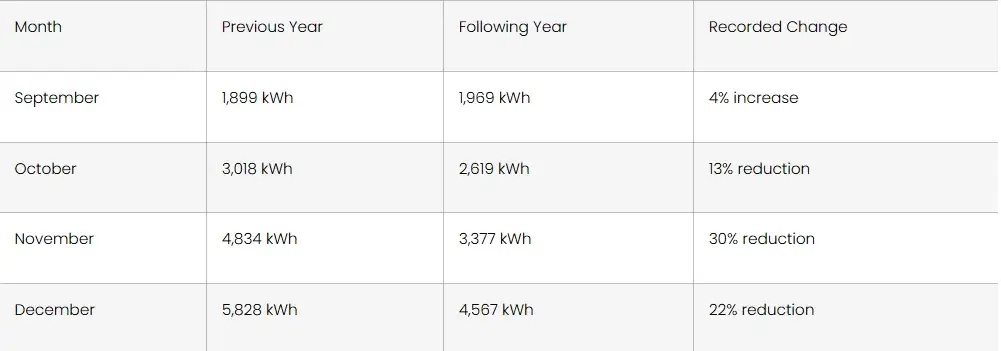
One LandVac customer provided us with gas consumption data from before and after their glazing upgrade.

Their property uses gas for both space heating and hot water, meaning the figures cannot isolate heating consumption associated specifically with the windows.

Their recorded year-on-year consumption was:

The customer also recorded external temperature data and highlighted several variables, including additional hot-water consumption from house guests and the thermal lag associated with the property’s double-brick construction.

These figures are not a controlled scientific study and cannot be attributed solely to LandVac. Weather, occupancy, hot-water demand, heating behaviour and numerous other factors influence household energy consumption.

They do, however, provide an interesting real-world example of the data homeowners are beginning to collect after upgrading their glazing.

What About Modern uPVC and Aluminium Windows?

The advantages of vacuum glass aren’t limited to heritage windows.

For modern window systems designed around conventional 24–28mm sealed units, LandVac Optimum provides another solution.

LandVac Optimum combines vacuum glass with a spacer and an additional pane of glass to build the overall unit thickness to suit modern window systems while retaining vacuum glass technology at the heart of the unit.

This opens LandVac technology to:

  • uPVC windows
  • Aluminium systems
  • Modern timber windows
  • New-build properties
  • Commercial projects
  • High-performance renovations.

Vacuum glass therefore isn’t simply a specialist solution for old windows.

It represents an alternative approach to high-performance glazing across both traditional and modern buildings.

Vacuum Glass vs Double Glazing: The Bottom Line

Double glazing has served the glazing industry extremely well for decades.

But technology has moved forward.

For a property owner choosing glazing today, the question shouldn’t simply be “What is cheapest to install?”

It should be:

“What do I want these windows to deliver over the next 10, 20 or 25 years?”

Compare the technologies:

Standard double glazing:
Approximately 1.3 W/m²K from a unit typically 24–28mm thick.

Slimline heritage double glazing:
Approximately 1.9–2.6 W/m²K from a unit typically 12–16mm thick, with warranties that can be considerably shorter depending on specification.

LandVac Vacuum Glass:
As low as 0.34–0.40 W/m²K, available from just 6.3mm thick, backed by a 25-year warranty.

LandVac costs more initially.

But initial price and long-term value are not the same thing.

When you consider thermal performance, warranty, potential replacement cycles, installation costs, disruption, energy retention and the potential to preserve existing traditional windows, the comparison becomes much more compelling.

For heritage properties in particular, LandVac offers something conventional double glazing struggles to achieve:

  • Exceptional modern performance without demanding a modern-looking window.

For homeowners already considering upgrading single glazing to slimline double glazing, LandVac deserves serious consideration before that decision is made.

Why invest in a thicker unit with significantly higher heat transfer and potentially a shorter warranty simply because it costs less on day one?

LandVac allows you to invest once in exceptionally high-performance glazing designed for the long term.

Thin glass no longer has to mean compromised performance.

Heritage character no longer has to mean accepting poor insulation.

And exceptional thermal performance no longer has to mean installing exceptionally thick glass.

LandVac changes what is possible with glazing.

Considering LandVac for Your Project?

At 1st Vacuum Glass, we work with homeowners, joiners, glaziers, window manufacturers and architects to determine the most suitable LandVac specification for each project.

Whether you’re considering replacing single glazing, comparing LandVac with slimline double glazing, restoring traditional sash windows or looking for exceptional thermal performance in a modern window system, our team can help you understand the options.

Before committing to conventional or slimline double glazing, speak to us and find out what could be achieved with LandVac Vacuum Glass.

Share this post:

Blog Posts

View more info & Advice